
Using your business account for personal use is one of the most common habits CPAs see, and one of the most costly to untangle later.
It usually starts small. A coffee run you meant to pay for yourself. A personal purchase that slipped onto the business card. An Amazon order where business expenses and household supplies landed in the same cart. And then, almost inevitably, the thought: My accountant will find a way to make that work.
Sometimes they can. But there is always a cost, in their time, your money, or both.
If you have ever mixed personal and business expenses, you are not a horrible person or a doomed-to-fail business owner. You are a human, and like ALL of us, you made a mistake. This is one of the most common things that walks through a CPA’s door, and it is also one of the most fixable. But the fixing goes much smoother when you understand what is actually at stake legally, financially, and practically, and why keeping those accounts separate matters far beyond keeping things tidy.
So let’s talk about it honestly.
Why Using Your Business Account for Personal Use Creates Real Problems
Look, most people who end up mixing their personal finances and business finances are not doing it out of laziness or bad character. Small business owners wear approximately eleven hats at once, and sometimes the financial details fall through the cracks. But good intentions do not protect you from the real consequences, and there are more of them than most people realize.
The Tax and Bookkeeping Consequences: What Is Actually at Stake
When personal expenses run through your business checking account, or business purchases land on your personal card, your books become unreliable. Every transaction has to be reviewed, questioned, and manually categorized. Was that dinner a business meal or a personal one? Was that Amazon charge for office supplies or your household?
At tax time, this creates two problems that work against you simultaneously. Legitimate business deductions get missed because they are buried under personal spending that does not belong in your business records. And personal purchases that were accidentally categorized as business expenses create exposure with the IRS, the kind of exposure that, at best, requires correction and, at worst, triggers scrutiny.
Your tax advisor’s time is finite. When they are spending it untangling your records instead of doing actual tax preparation, that is money you are paying for something that could have been avoided by using your dedicated business account from the start.
The Legal Exposure You May Not Know About
If you operate as a limited liability company, you have something called a corporate veil, which is the legal separation between you as an individual and your business as a separate legal entity. That separation is what protects your personal assets, your personal bank account, your savings accounts, and your home if your business ever faces serious legal trouble or business debts it cannot pay.
Here is what most small business owners do not know: mixing personal funds and business funds can dissolve that protection.
Courts refer to it as piercing the corporate veil. If there is no real financial separation between you and your business in practice, if your personal money and business money are routinely flowing in and out of the same accounts, a judge can determine that there is no meaningful legal separation either. The business structure you set up to protect yourself stops doing its job.
For sole proprietorships, there is less formal separation to begin with. But for LLC owners and similar business structures, this is not a minor technical issue. It is a legal liability that can reach into your personal life in ways that are genuinely difficult to recover from.
Your Numbers Are Telling You a Story That Is Not True
This is less dramatic than legal liability, but it affects your business every single day, not just at tax time. When personal spending runs through your business checking account, your profit margins are distorted. Your cash flow reports do not reflect reality. Your business income looks different than it actually is. If you ever want to apply for business loans, bring on business partners, or make a confident decision about whether your business can afford a new hire or a larger investment, you cannot trust numbers that include your grocery runs and personal purchases.
A separate business bank account gives you an accurate, real-time picture of what your business is actually earning and spending. That is not just a bookkeeping preference. This is the foundation of every sound business decision you will ever make.

The Stewardship Perspective
For small business owners who approach their finances through a faith-based lens, there is one more dimension worth naming.
Stewardship is simply being a faithful, intentional manager of what you have been given, including your money, because it comes from God. But you cannot manage clearly what you cannot see clearly. When personal funds and business funds are tangled together, you cannot give every dollar a purpose because you are not certain whose dollar it is.
Keeping your business and personal finances separate is one of the most practical acts of stewardship you can take as a business owner. It is not about perfection. It is about building the kind of financial clarity that makes intentional and faithful financial management possible.
Cautionary Tales From the CPA’s Desk
The following are hypothetical scenarios, but if you have been a CPA for any length of time, you will recognize each one immediately, because some version of them walks in the door every single tax season. Names, details, and identifying information have been changed to protect the innocent. (And yes, in every one of these stories, the person is innocent. That is rather the point.)
The Sole Proprietorship Owner Who Lost Her Deductions
Sarah ran a small photography business as a sole proprietorship. She had one personal checking account for everything, client payments, equipment costs, personal bills, and her kids’ school fees. When tax season arrived, she handed her accountant a year’s worth of bank statements and said hopefully, “most of it is probably deductible.”
Hours of work later, the accountant had done her best, but Sarah still walked away having missed thousands of dollars in legitimate business deductions that simply could not be verified. There was no clean record of what was a business expense and what was personal spending. And because some personal purchases had been categorized as business expenses in prior years, there was extra scrutiny to navigate on top of it.
A separate business account from the beginning would have made every deduction clear, documented, and defensible.
The LLC Owner Who Did Not Understand the Veil
Marcus ran a consulting firm structured as a limited liability company. He was proud of the legal protections that came with his business structure, but he had one checking account for everything. Business income came in. Personal bills, business transactions, and personal spending all went out of the same place.
When a client dispute escalated into a legal matter, Marcus assumed his LLC would protect his personal assets. But because he had pierced the corporate veil, the LLC did not protect him. His financial records showed no real legal separation between him and his business. The corporate veil had been effectively dissolved, not by any intentional decision, but by years of mixed business transactions which added up to a pattern that courts take seriously.
The Side Hustler Who Outgrew Her Systems
Priya started her bookkeeping side hustle with two clients and ran everything through her personal accounts. When the business was small, a separate account felt unnecessary.
By year two, she had eight clients, real business income, and a tax filing situation she was not prepared for. When she finally hired a CPA, the first two sessions were spent reconstructing what was business and what was personal, time she paid for that went toward untangling the past instead of planning for the future.
Starting with a dedicated account, even before the business felt ready, would have saved her significantly.
If any of these scenarios made you a little nervous, that is actually a good sign. It means you are paying attention and that you care about doing business above board and honestly! And there is no better time to get clear on what the IRS expects from your business records than right now. Grab the free guide below.
Common Mistakes That Lead to Mixing Business Expenses and Personal Expenses
Here are the most frequent ways business funds and personal funds get tangled, and what actually prevents each one.
1. Using a Personal Card for a Quick Business Purchase
It happens in the moment. You are at the store, you only have your personal card, and you plan to pay yourself back later. You rarely do, and even when you do, the transaction record still requires manual correction. One quick purchase becomes a habit. The habit becomes a year’s worth of messy bookkeeping.
Prevention Tip: Keep your business debit card with you. It is one card. It travels well. If you genuinely forget, log the purchase immediately and reimburse the business that same day before anything else gets in the way.

2. Floating Personal Expenses Through Business When Cash Flow Is Tight
This is the most understandable mistake on this list, and also one of the most damaging. When business cash flow gets tight, it is tempting to cover personal expenses through the business account. Even small amounts add up quickly, and they cloud your financial picture in ways that make the underlying cash flow problem harder to diagnose and solve.
Prevention Tip: If personal finances are consistently creating a pull on your business account, that is worth a real conversation with a CPA, not just a bookkeeping problem to manage around. The solution is rarely more commingling. It is usually a personal budget issue, a pricing issue, or a business structure issue that deserves to be addressed directly.
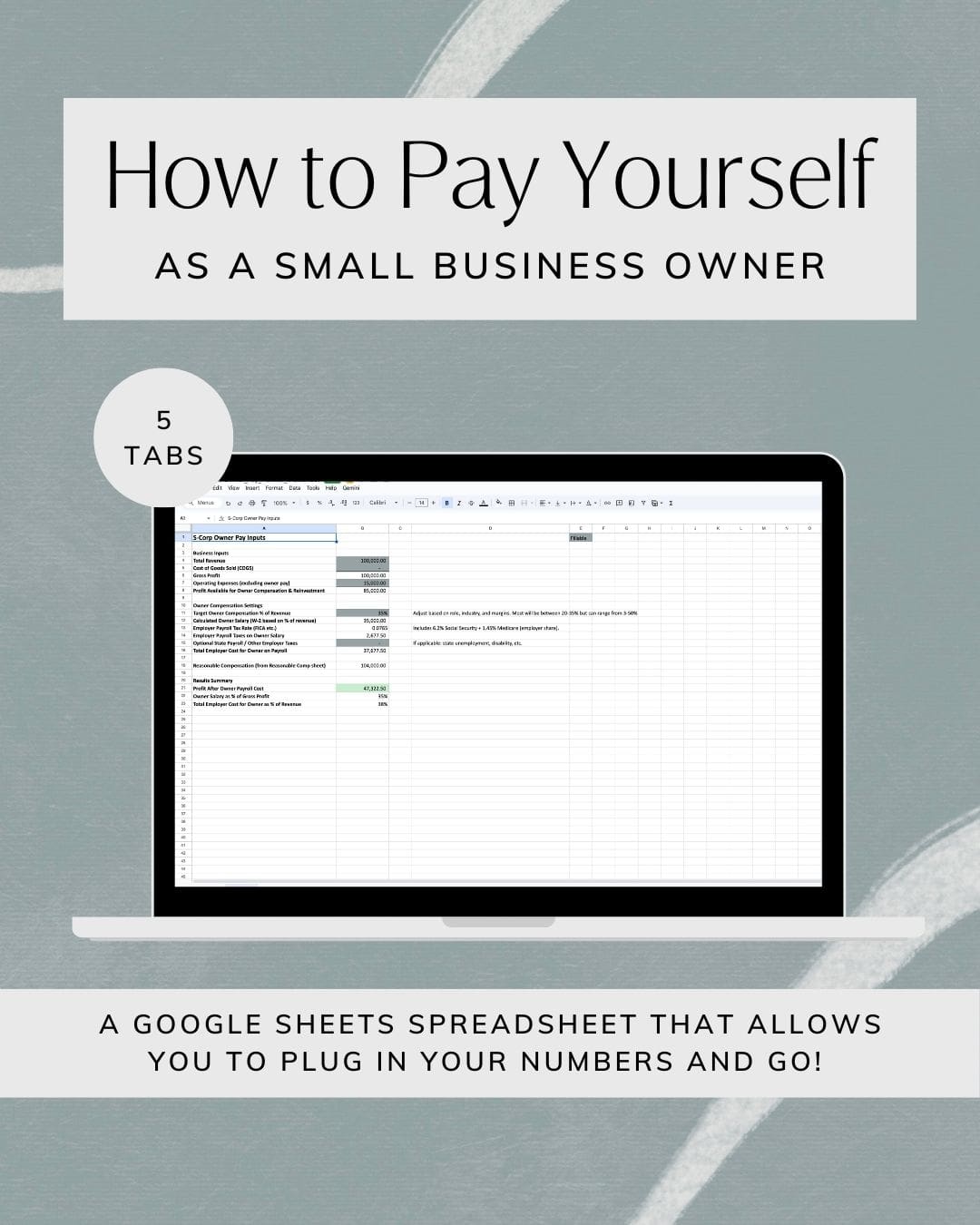
Bonus Tip: There’s also a chance that you’re not paying yourself enough! Grab the How to Pay Yourself Calculator and settle the dispute once and for all.
3. Never Setting Up a Dedicated Business Account at All
Many new small business owners never open a separate business checking account because the business feels too small or informal to justify it. But the size of your business does not change the need for financial clarity. If money is moving, it needs a home.
Prevention Tip: Open a dedicated business account when you start, even before you have significant revenue. Most financial institutions offer business banking options with low fees or no monthly fees for early-stage small businesses. You need your employer identification number (or Social Security number if you are a sole proprietorship), and your business name.
4. Treating Business Income As Personal Income Immediately
When a client payment hits the business account, it can feel like your money, because it is. But moving it immediately to personal spending before business expenses, taxes, and reserves are accounted for creates cash flow problems and record-keeping problems in one motion.
Prevention Tip: Set a consistent schedule for your owner’s draw or salary: a planned, intentional transfer that becomes your personal income. What remains in the business account stays there for business purposes. This is not a restriction. It is clarity.
How to Fix This Problem for Good
If you have been mixing personal expenses and business expenses for a few months or for years, here is how to move forward cleanly.
1. Open a Dedicated Business Account
If you do not have one, this is the first step. A separate business bank account is non-negotiable for accurate bookkeeping, clean tax records, and legal protections. Most banks and credit unions offer straightforward business banking options for small business owners. Go open one. This week. Seriously.
2. Clean Up Your Existing Books
If you have months or years of mixed personal transactions and business transactions, you do not have to untangle them alone. A bookkeeper or CPA can help you reconstruct clean records, categorize business expenses correctly, and bring your books into a state where they are accurate and actually useful going forward.
3. Work With a CPA Who Understands Your Business
A CPA who knows your business structure, industry, and financial goals can help you build systems to prevent this problem from recurring. This will ensure that you are capturing every legitimate business deduction, and develop a tax strategy that actually serves your business growth in the long run.
If you have been managing your business finances solo and you are not fully confident in what you are doing, consider this your sign to call a CPA today!

