
Here’s the sad truth when it comes to tax-saving strategies: Most people don’t find out they missed a tax-saving strategy until it’s too late to use it. April rolls around, the tax return is filed, and somewhere in the fine print of the tax code sits a deduction or credit that needed action back in October.
We want something better for you! Real tax savings, the kind that puts hundreds or even thousands of dollars back in your pocket, almost never happen by accident. They happen because you knew what to do, and you did it before the calendar ran out.
Now, don’t feel bad if you’ve missed out on a tax saving strategy. It’s a common scenario and one that we’ve helped lots of clients through. Really, nobody is trying to overpay the IRS on purpose. They just didn’t know a certain move was even on the table, or they found out about it too late to actually use it. That gap, between what’s available and what people actually claim, is where most of the “extra” tax bill hides. It’s not usually a mistake. It’s a missed opportunity.
Every so often, we hear about a “tax saving hack” that someone is teaching on a video, a podcast, or (I’m not making this up) Facebook groups. Some of those strategies are genuinely smart. But some of them are one audit letter away from becoming a very expensive lesson.
So before we get into the list, here’s an easy-to-use filter that will help you even if you’re not a CPA! It works whether you’re a W-2 employee or a business owner, and it’s the difference between a legitimate tax strategy and a decision you’ll regret explaining to the IRS. Five strategies, one filter, and no jargon you need an accounting degree to understand.
1. The One Question That Separates a Smart Strategy from a Red Flag
Open up any social media app and type in taxes or tax savings, and you’re sure to find some off-the-wall “deduction hack” that some guru is promoting. While we love some good savings here, the fact of the matter is, not every “tax saving strategy” is a good one. Some of them should get more flags than a pro football game with mad refs. One of the top overarching strategies that I find MOST helpful for the average small business owner, or heck, even just the average American, is to ask yourself this:
Could you defend this decision in a court of law if asked about it directly? Not “there’s a chance it works.” Could you confidently explain, in plain language, why you made this choice and point to the rule that allows it?
Truly, that question does more work than any tax software or checklist ever could! Asking this question filters out the strategies that only sound good because nobody’s looked at the fine print yet.
A legitimate tax deduction has paperwork behind it. There’s a rule you can point to in the U.S. tax code or in the IRS guidance that says this deduction, this credit, or this contribution is allowed under these conditions. It holds up because it’s in line with the law, not because it’s clever. Strategies that get people into trouble usually rely on you not getting caught, not on the deduction actually being valid.
P.S. This is exactly why I built the free guide “How to Stay Out of Jail for Tax Fraud.” (Grab it here if you haven’t already; the name is a joke, the content isn’t.) It walks through the specific decisions that separate defensible tax planning from the kind that gets flagged, so you’re not guessing.
Here’s the good news. Once you’re filtering every decision through that one question, the rest of this list gets a lot less intimidating. You’re not looking for loopholes. You’re looking for legal, documented, defensible moves sitting right in front of most taxpayers that go unused, every single year.
2. Retirement Accounts Are Still the Easiest Win
If I could only give business owners and W-2 employees one tax strategy, it would be this one. Retirement accounts are still the simplest, most defensible way to lower your taxable income while building toward your financial goals at the same time.
Here’s how it works with a traditional IRA or a traditional 401(k). Money you contribute reduces your taxable income for the current year, and it grows tax-deferred until you withdraw it in retirement. Traditional IRA or 401(k) accounts are tax-deferred accounts, meaning the tax bill gets postponed, not erased. For 2026, you can contribute up to $7,500 to an individual retirement account and up to $24,500 to a 401(k), 403(b), or similar workplace plan, per current IRS contribution limits. If you’re 50 or older, catch-up contributions push your 401(k) total to $32,500, and $35,750 if you’re between 60 and 63.
A Roth IRA works differently. You don’t get a deduction up front, but qualified withdrawals in retirement, including all the growth, come out completely tax-free. That’s a real trade worth thinking through with your tax advisor: pay tax now at your current rate, or pay tax later, at whatever ends up being your higher tax bracket or your lower tax bracket down the road. For people bracing for higher tax rates in the years ahead, that conversation matters even more.
Some of you already have a traditional IRA and may be wondering about a Roth conversion, moving those dollars from traditional to a Roth. Federal income tax rules allow it, and it can make real sense, especially in a year when your income is temporarily lower than usual. It also creates a tax bill in the year you convert, so loop in your tax advisor or financial advisor before you decide. One more thing worth knowing ahead of time: traditional accounts come with minimum distributions required once you hit a certain age, so the tax you deferred eventually comes due. A Roth doesn’t carry that requirement during your lifetime.
Health savings accounts (or HSAs) deserve a mention too, even though they’re not technically a retirement plan. If you have a high-deductible health plan, an HSA lets you contribute pretax dollars, up to $4,400 for individual coverage or $8,750 for family coverage in 2026, toward qualified medical expenses, tax-free, and roll over whatever you don’t spend, year after year. If your employer offers a flexible spending account instead, similar pretax logic applies. Just remember most FSA dollars don’t roll over the way HSA dollars do.
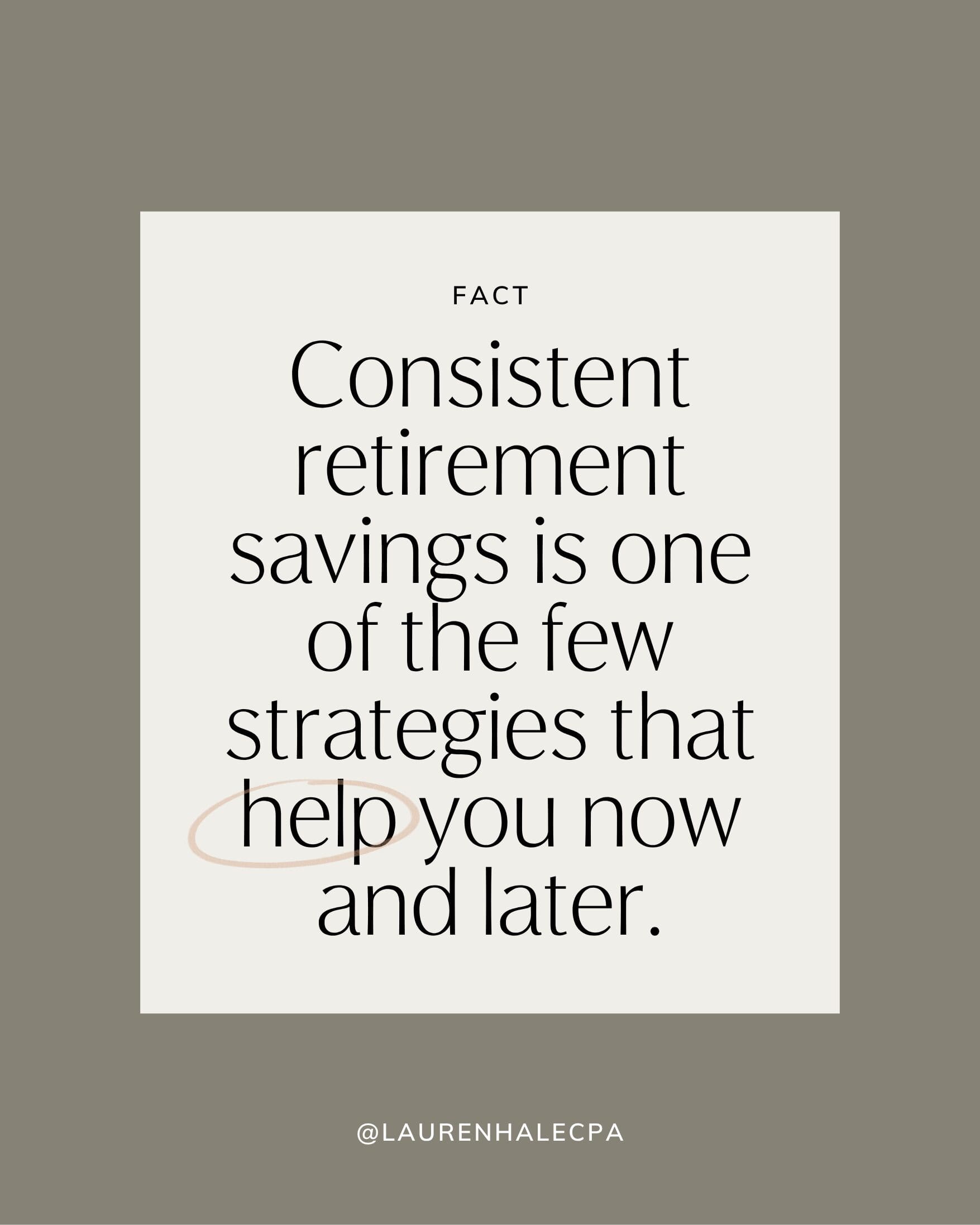
Fortunately, none of this requires a finance degree. It does, however, require savvy tax planning and making the contribution before the deadline (usually the end of the year for a workplace plan, and the tax filing deadline the following spring for an IRA). Consistent retirement savings is one of the few strategies that helps you now and later. Automate your contributions if you can, and let compounding interest do its work over future years.
3. Deductions and Credits You’re Probably Leaving on the Table
People throw around “tax deduction” and “tax credit” like they mean the same thing, but they work differently, and once you see how, you’ll know exactly which ones to chase first.
Think of a tax deduction as something that shrinks the pile of income the IRS taxes you on in the first place.
A tax credit works differently. It shows up after your tax bill is already calculated and takes a bite straight out of what you owe, dollar for dollar. That’s why a $1,000 credit almost always beats a $1,000 deduction: a tax credit hits your bottom line directly, no matter what bracket you’re in.
Every year, you and your accountant will make one big call up front: take the standard deduction, or itemize. For 2026, the standard deduction is $32,200 if you’re married filing jointly, and $16,100 if you’re filing single. If your actual deductible expenses (mortgage interest, property taxes, big medical bills, charitable giving) don’t add up to more than that, just take the standard deduction and move on with your life. You don’t get a prize for itemizing out of stubbornness.
Charitable giving got a little more interesting now too. Even if you take the standard deduction, you can now write off up to $1,000 in cash gifts to charity ($2,000 if you’re married), something that wasn’t always the case. And if you do itemize and give consistently, a donor-advised fund lets you bundle a few years of giving into one tax year, take the deduction now, and hand out the actual gifts over time. Worth a quick conversation with your CPA if generosity is already part of your plan.
If you run your own business, don’t sleep on the deductions built just for you. Home office costs, a percentage of your phone and internet bill, mileage, even a course you took to sharpen a skill, these can all shrink your taxable income, as long as you’ve kept the paperwork to back it up. Don’t forget to save the receipts and keep a mileage log. Future you (and your CPA) will be grateful you did.
And don’t forget the credits hiding in plain sight. Education credits, energy-efficient home upgrades, even the Saver’s Credit (if you’re putting money into a retirement account and fall under certain income limits), these are real money savings that plenty of people qualify for and never claim, simply because nobody told them to look.
Here’s the honest truth: the IRS isn’t going to call you up and mention the deduction you missed. That’s not their job. It’s your CPA’s, and it’s exactly why having a professional who cares on your team, someone who actually knows your situation, makes such a difference.
4. Don’t Wait Until December 31st
Almost every deduction and credit above works better with a full calendar year of planning behind it than a scramble in the last week of December. That planning is what actually lowers your tax burden (and your stress level).
Take tax-loss harvesting, for example. If you have investment losses sitting in a taxable account (stocks or funds that haven’t performed the way you hoped), you can sell them and use those capital losses to offset capital gains tax elsewhere in your portfolio. Long-term capital gains, on assets held more than a year, already get a lower rate than your ordinary income. Losses on investment income just make that math work even better in a down year. If your losses are bigger than your gains for the year, you can apply up to $3,000 of the difference against your ordinary income, with any leftover carried into future years. That’s a legitimate way to lower your tax liability, but it only works if you’re actually looking at your accounts before the year ends.
The same logic applies to retirement contributions, HSA funding, and charitable giving. Waiting until the second week of December to “gather up your tax stuff for the year” means half your options are already gone. Tax payments made quarterly are a good example too. If you’re a business owner, freelancer, or anyone with income that doesn’t have taxes withheld automatically, estimated payments keep you from a surprise tax bill, and possible penalties come tax season. Those tax payments are due four times a year, not once, and can help you stay on top of your tax strategy year round.
I get why year-end feels like the natural time to think about taxes. It’s when the calendar makes it obvious. But by the time December 31st arrives, most of the moves that actually reduce your amount of tax owed are already off the table: retirement contributions through a workplace plan usually close out at the end of the year, certain business purchases need to happen before year-end to count, and some charitable strategies have earlier windows than people expect.
This doesn’t mean that you need to think about taxes every single day (please don’t, that sounds exhausting and unnecessary). It means setting two or three checkpoints throughout the year, maybe once each quarter, where you check where you stand and ask whether anything needs to happen before the tax year closes. A short conversation with your CPA in October sure beats a stressful phone call in December, EVERY TIME!
5. The Habit That Saves Business Owners the Most Money
If you take nothing else from this post, take this. The single biggest difference between people who save significant money on taxes and people who don’t isn’t intelligence, income, or access to some secret strategy. It’s whether they talk to a knowledgeable CPA before they make a financial decision, not after.
It’s a common scenario: a business owner buys new equipment, switches how their business is structured, brings on a new client, or shuffles money between accounts, and then come March, they ask their CPA what it all means for their taxes. By then, most of the good options are already gone. The moves that actually change your tax picture favorably have to happen while there’s still a tax year left to work with, not after it’s closed.
That’s really the whole point of talking to your CPA early. It’s not about being cautious for caution’s sake. It’s about having room to make the best decision instead of finding out after the fact what you could have done differently. A quick conversation before a big decision means you get to plan around it. Waiting until tax season just means you’re finding out the bill.
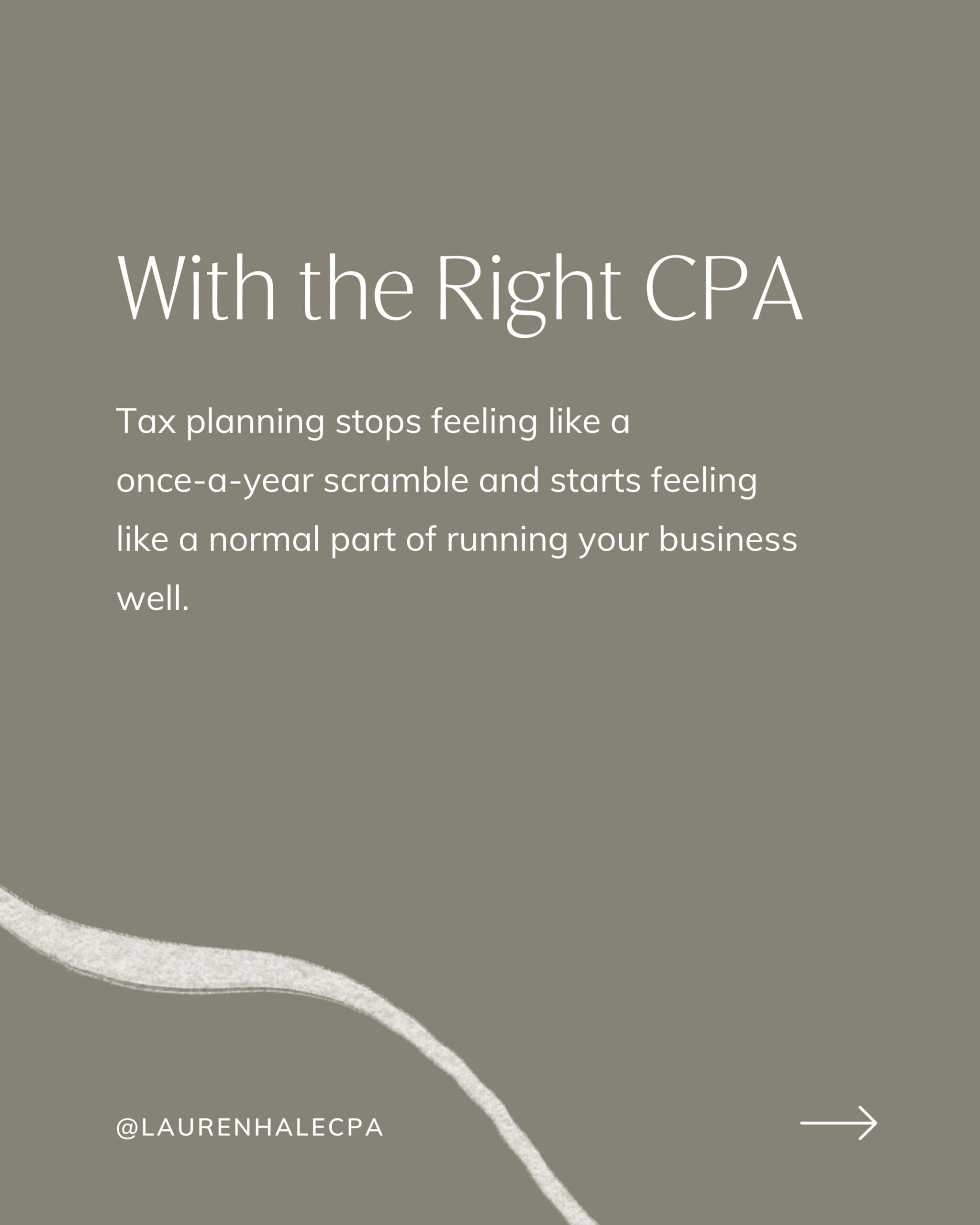
When you have a real relationship with your CPA, someone who actually knows your business and where you’re headed, tax planning stops feeling like a once-a-year scramble and starts feeling like a normal part of running your business well. You don’t need to call before every little purchase. But before the big ones, such as buying a major piece of equipment, your first hire, restructuring the business, buying property, converting a retirement account, a quick fifteen-minute conversation can save you real money and keep every move you make on solid ground!
And honestly, this is where a lot of the shame around taxes comes from in the first place. People feel like they should already know the answer, so they wait to ask until the question has turned into a problem. There’s no such thing as a dumb tax question. There’s only the cost of waiting too long to ask it.
The Right Tax Saving Strategies Start with One Question
Real tax savings aren’t about finding a secret loophole. They’re about knowing which strategies actually apply to you and running every decision through that same filter: could you explain it to the IRS with confidence?
That’s really the whole lesson here. You don’t need to memorize the tax code or turn into your own CPA. You just need to ask the right question before you make a move, and have someone in your corner who already knows the answer. That’s it. That’s the whole game.
You’re capable of understanding your own finances. You always have been. The rules just haven’t always been explained to you in a way that made sense, and that’s not on you.
This post is educational, not personalized tax or legal advice, and it doesn’t replace a real conversation with your own CPA about your own numbers.

