
Depending on when this article catches your attention, you could be thinking of one of two extremes. On one hand, you could say, “Oh my goodness, I’m in the biggest business slump ever right now, I feel like she’s reading my mind!” Or on the other extreme, you could be flying high and not even know the meaning of the word “slump,” because your business is booming and you are right in the middle of your peak season.
Regardless of where you’re at on the slump or no-slump spectrum, chances are good that you (or a friend who owns a small business) may go through a slump at some point.
What is a seasonal business slump, you ask? Well, the very unofficial (but real-life) definition is “a season of the year that historically produces lower sales numbers for a specific industry.”
This is different from a downturn in the market overall, and hopefully, fairly predictable based on your industry. For example: a lawn care company may see a slowdown in the winter months, a boutique may notice slower foot traffic after the holiday season. Or a family photographer may have a packed fall season followed by a much quieter stretch after the holidays.
Ice cream shops, ice cream stands, food trucks, swimming pool companies, snow removal services, landscaping services, farmers’ markets, summer camp programs, tour guides, rental businesses, and other seasonal businesses all tend to have peak months, slow periods, and different seasons that impact their revenue.
The point is not that something is “wrong” with your business every time sales slow down. Sometimes the slower season is simply part of the rhythm of your industry, your customer demand, or your specific business model. But even when it is normal, it still needs to be planned for.
So what is a great small business owner supposed to do when they can either see a slump coming or find themselves smack dab in the middle of one? Here are 6 realistic tips to protect your bottom line in the off-season.
1. Plan Ahead for Seasonal Business Slumps
This is the ideal scenario if you run a business that experiences big seasonal shifts or predictable slumps in sales.
If you know that you typically have a slow summer, for example, set aside extra funds to cover expenses during slow months. For other seasonal industries, the slow season may hit during the colder months. Or perhaps the warmer months, or another part of the year altogether. The exact time of year matters less than whether you know it is coming.
This can look like a certain percentage of income each month or even a certain dollar amount that you are trying to build up as a “slump cushion.” This is where giving every dollar a purpose really pays off. A slump cushion is just another envelope with a name on it.
Instead of picking a random number that sounds nice, this is where your bookkeeping records and historical sales data can be incredibly helpful.
Look back at the last 2-3 years if you have that information available.
- Which months were consistently slower?
- What were your average monthly expenses during those months?
- How much revenue did you actually need to keep the business running without panic?
- Were there patterns from previous seasons that could help you make a stronger business plan for next year?
Once you know that number, you can work backward and decide how much needs to be set aside during your stronger months.
A seasonal business slump is a lot less scary when you are not trying to make payroll, pay rent, cover inventory, manage new hires, or keep the lights on with crossed fingers and a credit card.
Careful planning is one of the best ways seasonal business owners can protect long-term success. Especially when irregular cash flow is simply part of the business structure.
2. Know Your Numbers Before You Make Big Decisions
Before you start slashing expenses, launching new products, or assuming the sky is falling, take a minute. Look at what is actually happening in your numbers.
Is revenue down, but profit margins are still healthy? Are sales steady, but expenses have crept up? Are you actually in trouble, or are you comparing a normal slow month to your busiest month of the year?
These are very different situations, and they call for very different decisions.
Cue the importance of your break-even numbers! Your break-even number is the amount of money your business needs to bring in to cover its basic expenses. If you know that number before a slow season hits, you can make much calmer decisions.
This helps you know what you actually need, instead of guessing based on how nervous you feel. A mid-year financial check-up is a great place to start if you have not looked closely at these numbers in a while.
This is also a great time to take a closer look at your cash flow management. Seasonal operations often have high demand during peak times and much lower demand during the rest of the year, which means small business owners need to understand how money moves in and out of the business during both busy periods and slower months.
3. Diversify
Can’t sell ice to the Eskimos very well in the winter? We get that. As much as we want to believe in our products and services and how much they help people all year round, the fact of the matter is that weather and seasons have a huge impact on certain products and services.
Look at mountain ski resorts. Do they make as much in sales over the summer when the skies are blue and the grass is green? No. No, they don’t. But providing gondola rides, hiking guides, and keeping rooms for rent to summer hikers DOES help ease the pain from the lack of ski activity.
Now, this does not mean you need to panic-create a brand-new offer every time business slows down. That can actually make things worse if the new idea creates more expenses, more stress, and very little profit.
But it may be worth asking, “Is there a way we can serve our customers in a different season without completely reinventing the business?”
Perhaps that means adding a maintenance package, offering an off-season service, creating a smaller product, bundling something differently, promoting off-season specials, or highlighting something that usually gets ignored during your busy season.
The goal is not to chase every idea. The goal is to use wisdom and your actual numbers to decide whether there is a realistic way to bring in revenue during the slower months.
This can be a good idea for service-based businesses, local businesses, and seasonal businesses that already have a loyal customer base.
You are not necessarily looking for some shiny new business or a random list of profitable seasonal business ideas. You are looking for new opportunities that fit your target audience, support customer satisfaction, and make sense with your actual business model.

4. Trim expenses intentionally before & during seasonal business slumps
As much as many business owners wish that they could keep all their employees and contractors booked full time all year, the fact of the matter is that some work is just more seasonal than others.
And while it certainly hurts to have THAT conversation with a trusted team member, it is part of running a profitable business that can live to serve another day.
As much as it may stink to have to cut someone’s hours back or lay off seasonal employees altogether, cutting costs during slow seasons could be the factor that enables your business to stay afloat and continue to help people for many more years to come.
Seasonal staff, seasonal workers, and seasonal employees can be a necessary part of running the business during peak times, especially when customer demand is high and you only have a short window to serve potential customers well. But when that busy season ends, payroll needs to match reality.

That being said, not every expense should be cut just because sales are slower. Some expenses are wasteful, some are necessary, and some are actually helping your business recover faster.
For example, cutting unused subscriptions, extra inventory, or expenses that are not producing a return may be wise. But completely disappearing from marketing, neglecting customer service, skipping important legal requirements, or cutting the tools that help you operate efficiently may hurt more than it helps.
The key is to trim intentionally, not emotionally. Look at your expenses line by line and ask, “Is this helping us stay profitable, serve well, or prepare for the next busy season?” If the answer is no, it may be time to cut it, pause it, or renegotiate it.
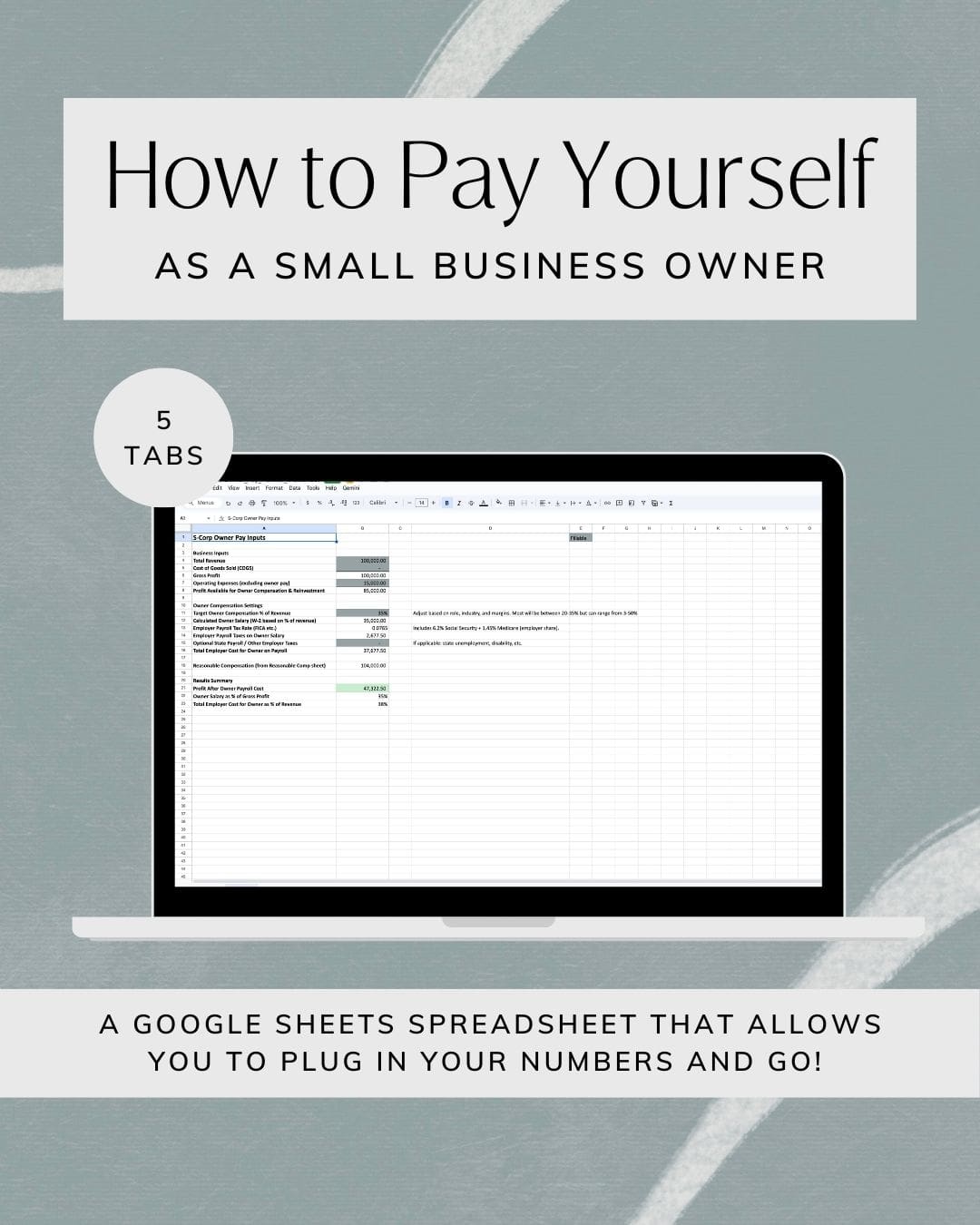
Trimming payroll during a slow season is never fun, but knowing exactly what you owe yourself makes it easier. Grab this guide to help simplify owner pay no matter what season you’re in.
5. Don’t Disappear During the Slow Season
This one may feel a little counterintuitive, but hear us out.
When business slows down, a lot of small business owners go quiet. Going quiet on social media. They stop emailing. Forget to follow-up. They stop talking about what they do because they feel discouraged or assume nobody is buying anyway.
But a slow season can actually be a great time to nurture leads, reconnect with past customers, collect testimonials, update your website, clean up your systems, and prepare for the next wave of business. It can also be the perfect time to test easy ways to stay visible without adding a lot of extra work.
You may not be making as many sales today, but that does not mean the relationships you build today will not turn into revenue later.
This does not mean spending money recklessly on marketing when the business truly cannot afford it. It simply means that if your visibility goes completely silent during every slow season, you may be making the next season harder than it needs to be.
Even during the off season, your future customers may still be watching, learning, saving your information, and deciding who they want to hire when the time is right.

6. Be Careful About Using Debt as Your Default Cushion
When cash gets tight, it can be tempting to throw expenses on a credit card, take out a loan, or use a line of credit as the backup plan. And while there may be situations where financing is part of a bigger, well-thought-out strategy, debt should not be the automatic solution to a predictable seasonal business slump.
If your business has the same slow season every year, the sustainable long-term solution is planning, saving, and budgeting around that rhythm instead of borrowing your way through it every single time.
A credit card can feel like relief in the moment, but it can also turn next season’s income into last season’s cleanup. That is not a fun cycle to be in.
Before you rely on debt to get through a slump, look at your expenses, review your cash flow, talk with your bookkeeper or financial professional, and make sure you understand the full picture.
A Seasonal Business Slump Does Not Mean It’s Time To Panic
A seasonal business slump does not have to mean panic. It does not have to mean failure. And it definitely does not have to mean making rushed decisions from a place of fear.
But it does need a plan.
If your business has predictable slow seasons, use your stronger months wisely. Build margin. Watch your numbers. Know your break-even point. Keep an eye on expenses. Look for smart ways to serve your customers in different seasons. And above all, do not assume that ignoring the numbers will make them less stressful.
Good financial stewardship is not just about what you do when business is booming. It is also about how you prepare for the months when things are quieter. Whether your busiest time is the summer season, the holiday season, tourist season, growing season, or another specific season, the principle is the same: the busy season should help prepare the business for the slower part of the year.
If you are not sure whether your business is financially prepared for a slow season, this is exactly where good bookkeeping and proactive planning matter. Reach out to our team so we can help you understand your numbers before the slump hits.
And if you are already a client, no worries — reach out and we’ll be happy to talk through this together.

